
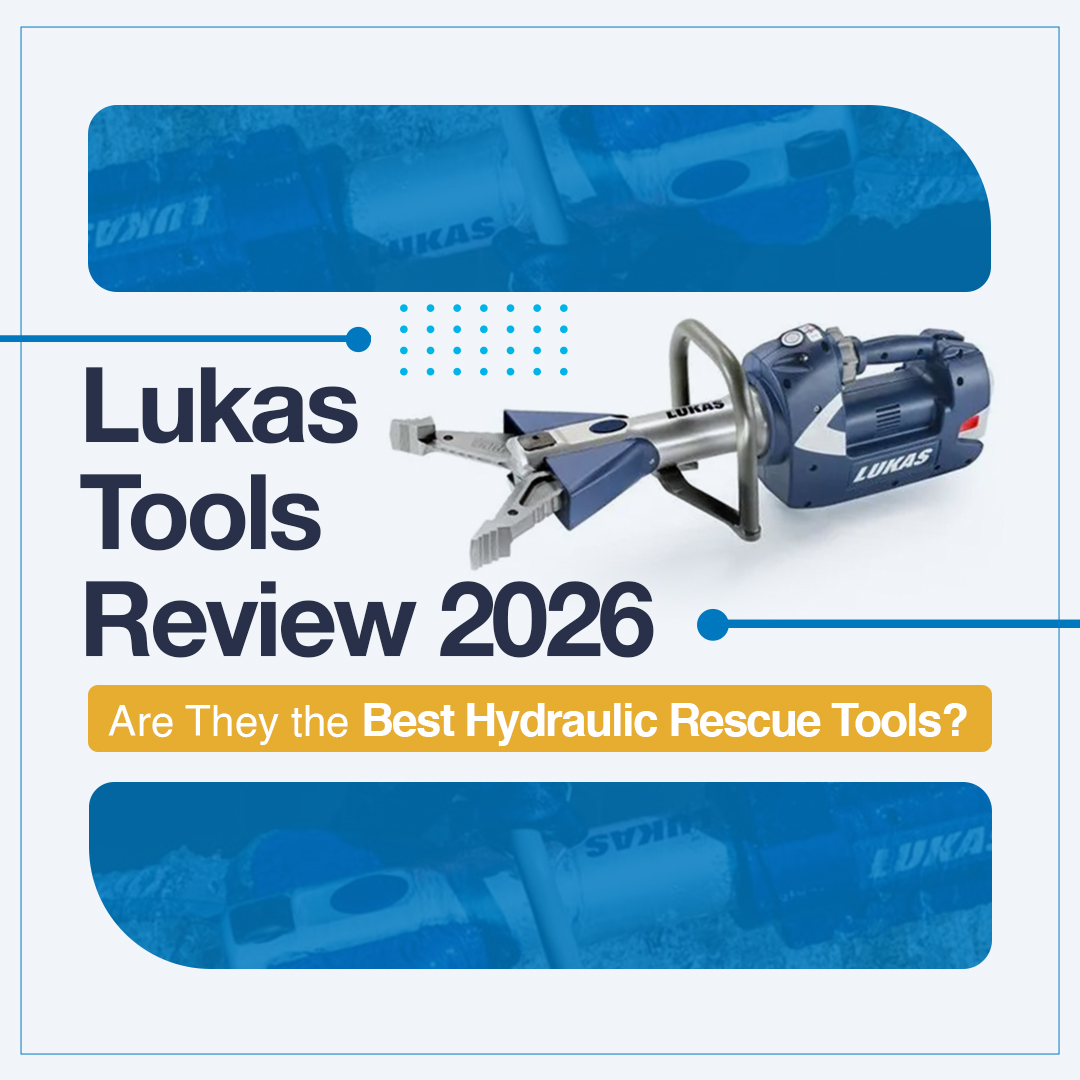
When you’re cutting someone out of a wrecked car, you don’t get a second chance to wish you’d brought better equipment. That’s the reality first responders live with. It’s also why the choice of hydraulic rescue tools matters far more than most people outside emergency services ever consider.
Lukas Tools have been in this space long enough that asking “are they still any good in 2026?” is a fair question, not a rhetorical one.
What hydraulic rescue tools actually do
These tools are built to cut, spread, or lift heavy material when time is short and the environment won’t cooperate. Vehicle extrication, structural collapse, confined space rescue. These are critical situations and not the ones where you can troubleshoot a finicky piece of kit on the fly.
Combi tools, cutters and spreaders each have a specific job. Combi tools combine cutting and spreading in a single unit. They are useful when you’re working alone or in a tight space with no room to swap tools. Cutters handle reinforced B-pillars and structural steel. Spreaders create the gaps that keep someone breathing until a medic arrives. Together, this is what “jaws of life” actually refers to, though most people outside the field couldn’t tell you which tool does what.
Where Lukas fits
LUKAS Hydraulik GmbH built one of the first hydraulic rescue cutters in 1972. More than fifty years of solving actual field problems, not just iterating on specs. Their tools now reach rescue teams in over 100 countries, which means they’ve had to work across German autobahn crashes, flood rescues, industrial accidents, and plenty of conditions nobody designed for.
What’s genuinely changed
The eDRAULIC series cuts the hydraulic hose entirely. Battery-powered, self-contained. No setup time spent untangling lines at a scene. A rescuer put it simply: not worrying about hydraulic lines is a game changer. That’s the kind of feedback that comes from someone who’s used both.
Most of the current lineup is IP68-rated — submersion-proof. In flood conditions or heavy rain, that’s not a minor checkbox. It’s a major must-have.
Ergonomics have improved too. The tools are still heavy-duty, but redesigned for one-handed use where possible. On a long extraction, that’s the difference between a rescuer who’s still effective after forty minutes and one who isn’t.
Is it the best?
That depends on what best means for your context.
For portability and battery performance, the eDRAULIC range is hard to match. For teams that need combi tools capable of switching between cutting and spreading mid-rescue, Lukas has solid options. For organizations working in extreme environments, underwater recovery, flood zones, industrial settings, IP68 across the range is a real advantage, not a spec line.
Other brands make good hydraulic rescue tools. There’s no single obvious winner in this category. Lukas holds its ground because the engineering is consistent, not because the marketing is loud.
IDEX FSG Lukas and IDEX India
Lukas operates under IDEX Corporation’s Fire and Safety Group. Practically, that means global supply chains, reliable parts availability, and R&D budgets a standalone manufacturer couldn’t sustain. IDEX India specifically brings this to a market with growing emergency response infrastructure — and does it with a focus on training and field support, not just product sales. High-performance tools are only as useful as the teams trained to use them.
Where this lands
Hydraulic rescue tools don’t get attention when they work. They can wreak havoc when they don’t. Lukas Tools have spent fifty years making sure theirs do. The eDRAULIC series is a real generational step up and not just a spec refresh. For rescue teams evaluating cutters and spreaders, combi tools, or a full hydraulic rescue tools upgrade, Lukas belongs on any serious shortlist.