
Maintaining uniformity in powder blends is one of the most critical requirements in pharmaceutical manufacturing. In the production of tablets. Capsules. And other solid dosage forms. The distribution of active ingredients and excipients must remain consistent throughout the entire batch. Even minor variations in blend composition can affect dosage accuracy. Regulatory compliance. And overall product quality.
One of the most common challenges faced by pharmaceutical manufacturers is blend segregation. This occurs when particles with different sizes. Densities. Or flow properties separate during handling. Transfer. Or discharge. When blend segregation happens. The composition of the mixture changes from one portion of the batch to another. The result can be inconsistent drug potency and rejected production batches.
To address this issue. Pharmaceutical facilities increasingly rely on advanced blending technologies that maintain uniformity throughout the production cycle. Among these technologies. The IBC Blender has emerged as one of the most effective solutions for preventing blend segregation during mixing. Storage. And material transfer.
Unlike traditional stationary mixers where powders are transferred multiple times between equipment. An IBC Blender performs mixing directly inside an intermediate bulk container (IBC). This contained process minimizes product handling. It also protects the blend from disturbances that may cause segregation.
Let’s understand how an IBC Blender works. Why blend segregation occurs in pharmaceutical production. And how modern IBC blending systems. Such as those offered by IDEX India through Matcon technology. Help maintain blend integrity and process efficiency.
Understanding IBC Blender
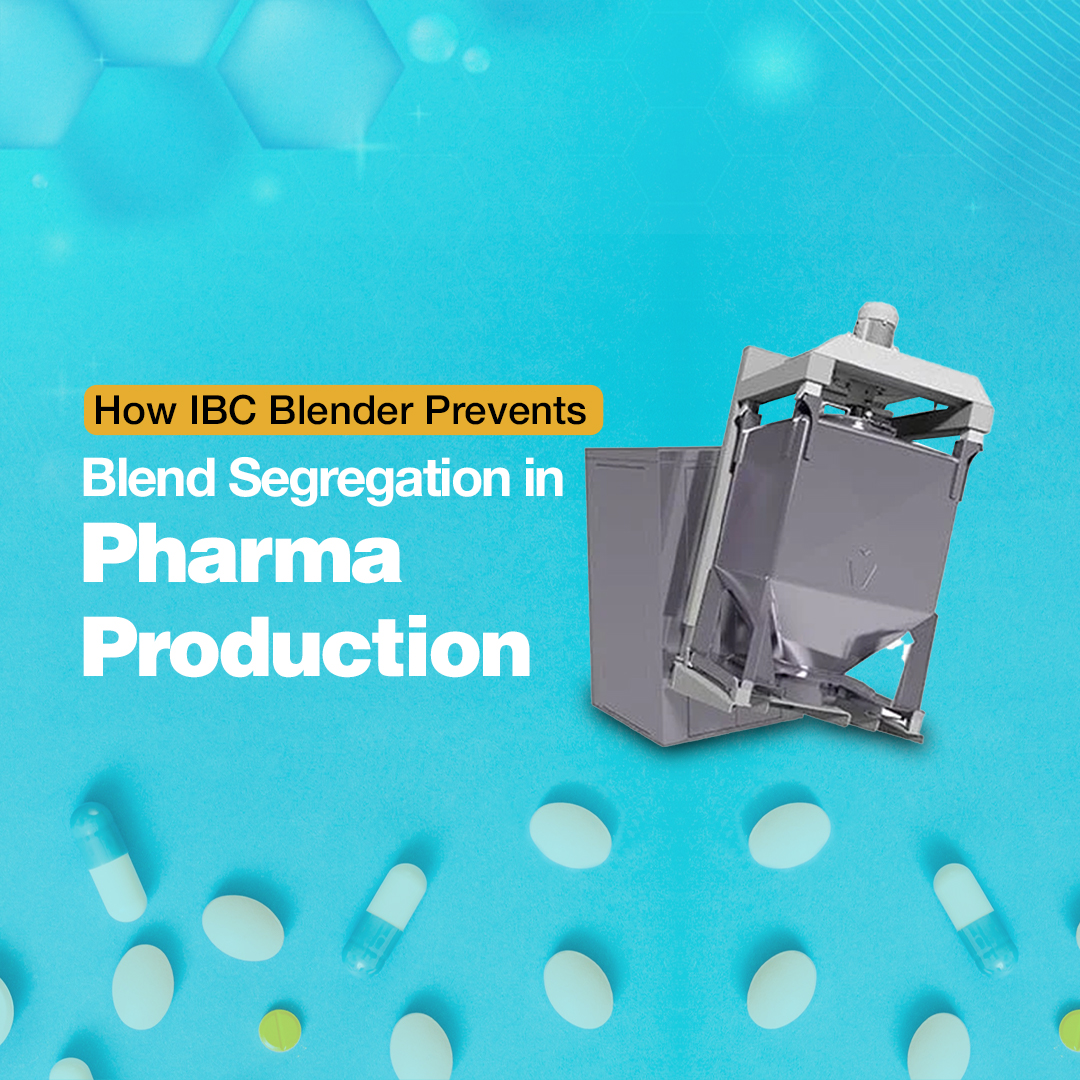
An IBC Blender is a pharmaceutical mixing system that blends powders inside a container known as an Intermediate Bulk Container (IBC). Instead of transferring materials into a fixed mixing vessel. The container itself becomes the blending chamber.
This method of blending is commonly referred to as “in-bin blending.” The powders are loaded into the IBC. The container is placed into the blender. And the entire bin rotates to mix the materials. Once blending is complete. The same container can be transported to downstream processes. Such as tablet compression or packaging.
The design of an IBC Blender offers several advantages for pharmaceutical production. Because the blend remains inside the same container throughout the process. There are fewer opportunities for blend segregation to occur.
Traditional mixers often require multiple material transfers between equipment. Each transfer stage increases the likelihood that particles with different characteristics may separate from one another. By eliminating unnecessary transfers. The IBC Blender significantly reduces this risk.
Another important aspect of the IBC Blender is its tumbling mixing motion. The container rotates on an axis that allows powders to move continuously inside the bin. This movement promotes even distribution of ingredients. It also helps maintain homogeneity across the entire batch.
IBC blending technology has become widely adopted in pharmaceutical facilities. Because it offers improved process control. Higher production efficiency. And better protection against blend segregation.
Operating Principles of IBC Blender
The effectiveness of the IBC Blender in preventing blend segregation lies in its controlled mixing and contained powder handling system. The blending process typically occurs in several stages.
Material Loading
The process begins by loading powders and pharmaceutical ingredients into the intermediate bulk container. This container acts as both the storage vessel and the blending chamber.
Because the materials remain inside the container throughout the process. There is minimal exposure to external environments. This contained handling approach helps maintain blend integrity. While reducing contamination risks.
Tumble Blending
Once the container is positioned in the blender. The IBC Blender rotates the bin in a controlled tumbling motion. This rotation causes the powders to cascade inside the container. Distributing particles evenly throughout the mixture.
Tumble blending works by creating continuous movement within the powder bed. As the container rotates. The particles flow across different planes inside the bin. This motion helps disperse ingredients evenly. And achieve uniform blending.
The geometry of the container and the rotational axis create multiple mixing zones inside the bin. These zones generate gentle shear forces. That encourage powders to mix thoroughly. While preventing damage to sensitive particles.
Contained Discharge
After blending is complete. The same container is transported to downstream processes. The product does not need to be transferred to another vessel for discharge.
This is a major advantage of the IBC Blender system. By eliminating intermediate transfers. The process significantly reduces the chances of blend segregation occurring during material handling.
Key Components and Technologies
The performance of an IBC Blender depends on several specialized components. These components work together to maintain blend integrity. And minimize segregation.
Intermediate Bulk Container (IBC)
The container itself is the core element of the IBC Blender system. The IBC acts as a storage vessel. Mixing chamber. And transfer container.
These containers are designed to handle powders. Granules. And pharmaceutical materials. While maintaining strict hygiene and containment standards.
Because the blend remains inside the container during the entire process. The risk of blend segregation caused by product transfer is minimized.
Blending Frame or Drive System
The blender frame holds the container securely while it rotates. The drive system controls the speed and motion of the tumbling action.
Modern IBC Blender systems allow precise control over rotation speed and blending time. This ensures consistent mixing across different formulations and batch sizes.
Cone Valve Technology
One of the most important innovations used in Matcon powder handling systems is cone valve technology. This feature helps maintain blend integrity during the discharge stage.
The cone valve creates a controlled annular gap at the outlet of the container. This allows material to flow uniformly through the entire cross-section of the container.
Because all material moves simultaneously. There are no dead zones or particle rolling effects. That can lead to blend segregation.
Control Systems
Modern IBC Blender systems are equipped with automated controls. These manage blending parameters such as rotation speed. Duration. And safety interlocks.
These systems allow operators to maintain consistent blending conditions across multiple batches.
Applications in Pharmaceutical Manufacturing
The IBC Blender is widely used in pharmaceutical production. Particularly in processes where maintaining uniformity is critical.
Oral Solid Dosage Manufacturing
In tablet and capsule production. The uniform distribution of active pharmaceutical ingredients is essential.
An IBC Blender ensures that powders are mixed evenly. And remain homogeneous throughout the manufacturing process. This reduces the risk of blend segregation. And helps maintain dosage accuracy.
Direct Compression Formulations
Direct compression processes rely on precise powder blends. Any variation in the mixture can affect tablet hardness. Dissolution rates. And product stability.
The IBC Blender helps maintain consistent blends. By preventing segregation during both mixing and material transfer.
Multi-Ingredient Blending
Pharmaceutical formulations often contain ingredients with different particle sizes and densities. These variations can increase the risk of blend segregation during processing.
IBC blending systems distribute particles evenly. While minimizing disturbance to the mixture.
Continuous Manufacturing Systems
Modern pharmaceutical plants increasingly adopt continuous or semi-continuous production models.
The IBC Blender integrates easily into these systems. Because the container can move between processing steps. Without requiring additional transfers.
Benefits and Challenges
Advantages of IBC Blender
The adoption of the IBC Blender in pharmaceutical manufacturing provides several operational advantages.
Prevention of Blend Segregation
The most significant advantage of the IBC Blender is its ability to prevent blend segregation. Because powders remain in the same container during mixing and transfer. The risk of particle separation is greatly reduced.
Improved Process Efficiency
IBC blending eliminates many of the cleaning and changeover tasks associated with traditional stationary mixers. The container itself acts as the mixing vessel. Allowing faster batch changeovers.
Higher Production Capacity
Manufacturers can achieve high overall equipment effectiveness (OEE). Because blending. Cleaning. And material preparation can occur simultaneously in different containers.
Reduced Cross-Contamination
Since the blend remains inside the container throughout the process. Exposure to external environments is minimized.
Flexible Batch Sizes
IBC systems support a wide range of container sizes. Allowing pharmaceutical manufacturers to process both small and large batches efficiently.
Operational Challenges
Despite its advantages. Implementing an IBC Blender requires careful process planning.
Factors such as container loading. Blending time. And powder characteristics must be optimized. To achieve the best results. Additionally. Operators must ensure that container handling systems are integrated effectively with upstream and downstream equipment.
However, when properly implemented. The IBC Blender significantly improves process consistency. And reduces the likelihood of blend segregation.
IDEX India’s Matcon IBC Blending Solutions
Advanced powder handling technology plays an important role in maintaining blend integrity during pharmaceutical production. IDEX India provides Matcon powder handling systems. That incorporate IBC Blender technology designed to address common challenges such as blend segregation. Containment. And material flow.
Matcon systems use in-bin blending combined with controlled discharge technologies. To maintain blend uniformity from mixing through final processing. These systems allow powders to remain in the same container throughout formulation. Blending. And transfer operations.
A key feature of the Matcon system is its patented cone valve technology. This technology enables controlled mass-flow discharge. Ensuring that powders exit the container uniformly without particle rolling or separation.
By enabling mass flow. The system ensures that all particles move at the same rate during discharge. This prevents blend segregation. And preserves the homogeneity of the mixture.
Matcon powder handling solutions also support fully contained powder transfer. This closed system reduces dust emissions. Improves operator safety. And maintains product quality throughout the production process.
For pharmaceutical manufacturers seeking to improve blend consistency. These advanced IBC Blender systems offer a reliable and scalable solution.
Conclusion
Maintaining blend uniformity is essential for producing safe and effective pharmaceutical products. When powders segregate during processing. It can lead to inconsistent dosage. Regulatory challenges. And costly production losses.
The IBC Blender offers a highly effective solution for preventing blend segregation in pharmaceutical production. By blending materials directly within the container. And eliminating unnecessary product transfers. This technology preserves blend integrity throughout the manufacturing process.
Advanced features such as tumble blending. Contained powder handling. And controlled discharge systems ensure that powders remain evenly distributed from mixing through final processing.
With technologies such as the Matcon powder handling systems offered by IDEX India. Pharmaceutical manufacturers can achieve consistent blend quality. Improved production efficiency. And greater control over powder processing operations.
As pharmaceutical production continues to evolve toward more efficient and contamination-free processes. The IBC Blender will remain a key technology. For maintaining blend uniformity. And preventing blend segregation in modern pharmaceutical manufacturing.