
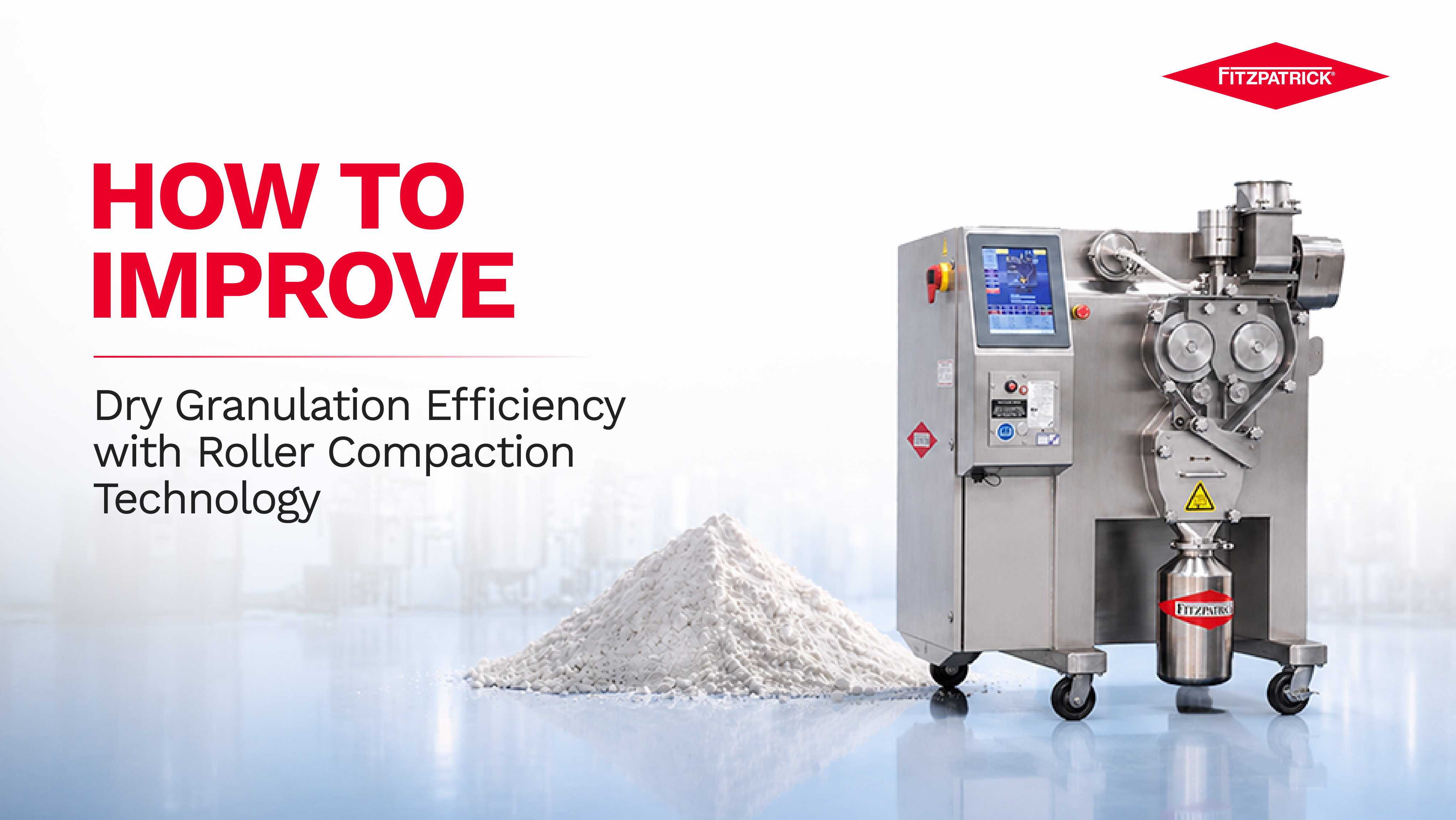
Understanding Dry Granulation Efficiency: The Direct Answer
To know how to improve dry granulation efficiency, pharmaceutical manufacturers must replace traditional slugging methods with advanced roller compaction technology that utilizes real-time automated roll gap and roll force control. Improving efficiency relies on maintaining a highly uniform ribbon density, which minimizes uncompacted “fines,” accelerates processing speeds, and eliminates material recirculation. By stabilizing the clearance between the compaction rollers, you directly prevent thermal degradation of sensitive active pharmaceutical ingredients (APIs), maximize downstream tableting yields, and reduce equipment cleaning downtime from hours to minutes.
What Is the Dry Granulation Process in Pharmaceutical Manufacturing?
The dry granulation process in pharmaceutical manufacturing is a foundational particle design method used to aggregate fine, low-density powder blends into dense, uniform granules without utilizing liquid binders or thermal drying stages.
This process is critical when dealing with complex, modern formulations where raw materials possess poor natural flowability or low bulk density. Without proper granulation, handling raw pharmaceutical powders leads to mass segregation in feed hoppers, severe dust contamination in the facility, and high weight variations during downstream tablet pressing or capsule filling.
Dry and Wet Granulation: Why Choose the Dry Granulation Method?
When evaluating dry and wet granulation frameworks, production plants must balance formulation sensitivities against total operational expenditure (OPEX).
While wet granulation relies on adding volatile solvents or water followed by high-heat fluid bed drying, the dry granulation method depends purely on mechanical compression. This makes dry granulation the definitive choice for:
- Moisture-Sensitive Formulations: Eliminates the risk of chemical hydrolysis in water-reactive actives.
- Heat-Sensitive APIs: Protects delicate therapeutic proteins, advanced biologics, and unstable antibiotics from thermal degradation.
- Slashed Footprints: Removes the need for expensive, energy-intensive drying ovens and multi-stage fluid bed processors.
To explore how optimizing inbound material handling further protects your granulated products from atmospheric moisture contamination before and after compaction, read our comprehensive overview on Matcon Powder Handling Systems.
What Are the Core Steps of Dry Granulation?
Achieving a high-yield output requires a deep understanding of the mechanical steps of dry granulation. When utilizing a modern roller compactor, the material moves through three synchronized zones:
1. The Feeding Zone: Fine raw powders are moved from a primary inlet hopper into the main processing area via a specialized vertical or horizontal screw feeder. This de-aerates the powder and ensures a continuous mass flow.
2. The Compaction Zone: The pre-conditioned powder is pulled between two counter-rotating rollers spinning under immense hydraulic pressure. The rollers compress the loose material into a solid, uniform sheet or “ribbon.”
3. The Milling Zone: The consolidated ribbon passes directly into an integrated screening mill, where it is gently broken down into coarse, free-flowing granules with a tightly targeted Particle Size Distribution (PSD).
How Roller Compaction Improves Dry Granulation Efficiency
Historically, companies relied on “slugging”—using heavy-duty tablet presses to repeatedly stamp massive, crude tablets that were later crushed. This method generated high friction, uneven granule densities, and excessive dust.
Modern roller compaction technology transforms this unpredictable operation into a highly reliable continuous process. Here is how roller compaction improves dry granulation performance:
- Synchronized Roll Control: High-performance units like the Fitzpatrick CCS series feature dynamic floating roll designs. If bulk density fluctuates mid-batch, the rolls automatically adjust their gap clearance to maintain a constant, pre-set pressure.
- Drastic Reduction in Fines: By stabilizing ribbon density, the machine ensures that nearly 100% of the powder turns into compliant granules on the first pass, cutting down the energy wasted on material recycling loops.
- Minimized Wear and Tear: Smooth, continuous rotary pressure places significantly less stress on mechanical components compared to the violent, high-vibration impacts of slugging tooling.
Key Benefits of Roller Compaction in Pharma Manufacturing
Implementing automated continuous roller compactors brings immediate, quantifiable benefits of roller compaction in pharma manufacturing operations:
| Operational Metric | Traditional Slugging | Advanced Roller Compaction | Impact on Efficiency |
| Material Yield | High percentage of dust/fines | Targeted Particle Size Distribution | Lower product waste, higher OEE |
| Contamination Risk | Open powder transfers required | Sealed, high-containment designs | Enhanced operator safety (OEB 5) |
| Cleaning Turnaround | Long, multi-part strip-downs | Wash-in-Place (WIP) automation | Up to 50% reduction in downtime |
| Downstream Output | Inconsistent tablet weight | Excellent granule flowability | High-speed, seamless tableting |
Industrial Use Cases: Where Precision Dry Granulation Matters Most
Precision dry granulation is highly valued across sectors where hygiene, strict containment, and batch safety are paramount:
High-Potency APIs (HPAPIs)
In oncology drug manufacturing, workers must be protected from toxic airborne particulates. Production-scale compactors like the Fitzpatrick CCS 320 feature hermetically sealed containment barriers capable of meeting OEB 4 and OEB 5 regulations, keeping hazardous dust safely locked away from the plant atmosphere.
Effervescent Tablets
Effervescent formulations react instantly when exposed to moisture. By deploying a closed, moisture-free roller compaction line, producers can safely granulate organic acids and carbonates without triggering a premature chemical reaction.
High-Density Nutraceuticals
For herbal extracts and vitamin blends that exhibit naturally poor compaction properties, roller compactors apply consistent, intense hydraulic force to reshape raw botanicals into highly flowable matrices suitable for fast capsule-filling lines.
Conclusion: Future-Proofing Your Powder Processing Line
Learning how to improve dry granulation efficiency is a critical requirement for manufacturing teams looking to lower operational costs while satisfying strict validation criteria. By moving away from manual, unmonitored processing methods and investing in precision roller compaction technology, you can successfully eliminate the variables that cause poor powder flow, high scrap rates, and inconsistent batch profiles.