
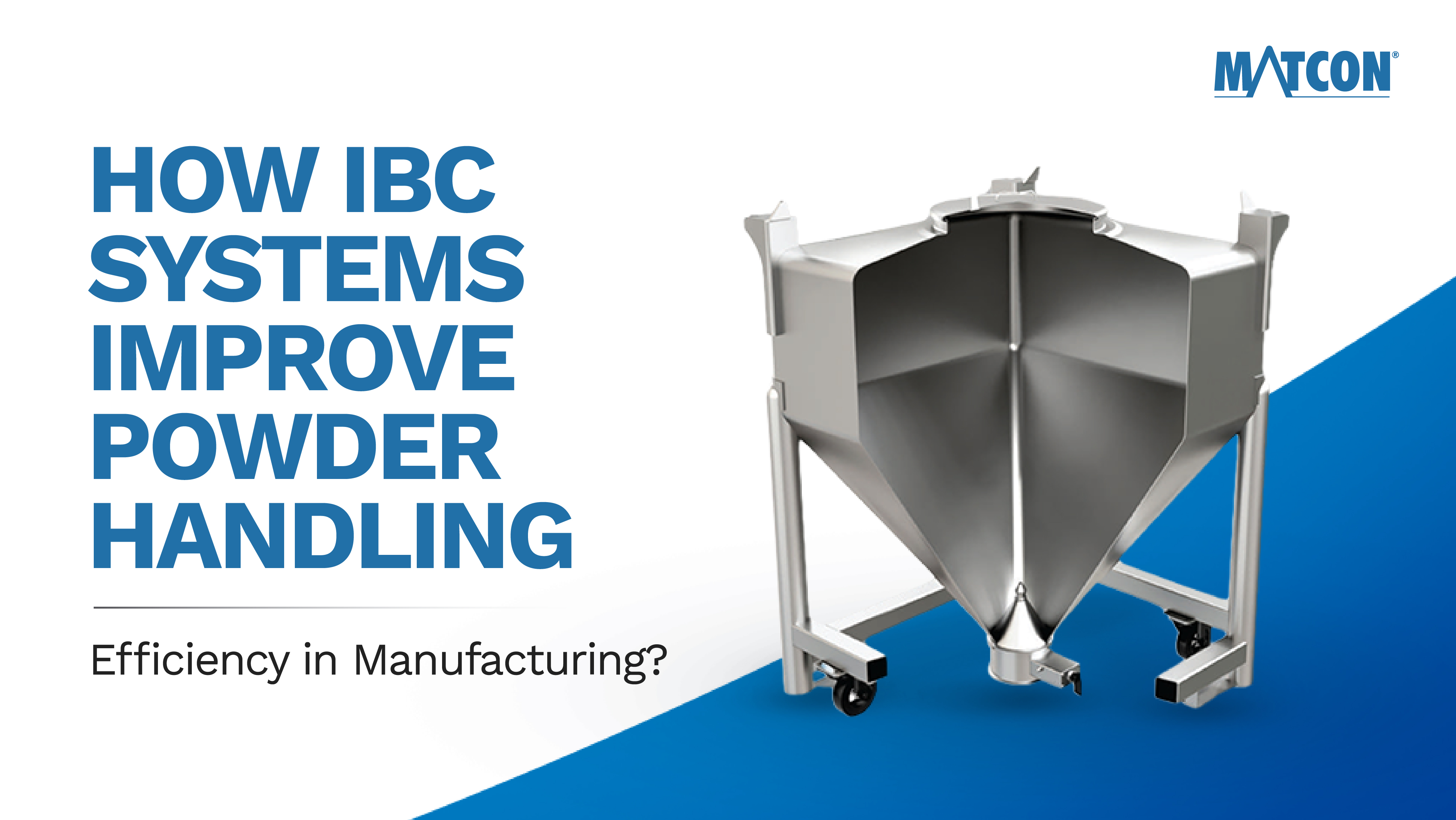
An intermediate bulk container system improves powder handling efficiency by decoupling processing stages and allowing formulation, blending, discharging, and washing to run concurrently. Matcon IBC systems use a patented internal Cone Valve to eliminate common powder flow challenges such as bridging, rat-holing, and blend segregation, ensuring automated and repeatable material transfer.
By replacing restrictive fixed-line production with a flexible parallel processing model, manufacturers can minimize cleaning downtime, prevent batch cross-contamination, and maximize overall equipment effectiveness.
Why Choose an Intermediate Bulk Container System for Powder Transfer?
Traditional manufacturing setups rely on fixed, coupled pipelines and stationary mixing vessels. This arrangement forces the entire production line to pause whenever a single station undergoes cleaning or an ingredient changeover.
An intermediate bulk container system acts as a mobile process vessel. Because materials remain securely enclosed within a high-grade stainless steel bin during transport, mixing, and dispensing, different manufacturing steps can run at the same time.
For example, while one container is discharging at a packaging station, a second container can be mixed in an offline tumble blender, and a third can undergo offline washing. This separation eliminates plant bottlenecks and establishes highly efficient lean manufacturing workflows.
How IBC Systems Improve Powder Handling Efficiency in Manufacturing?
Implementing dedicated powder handling equipment improves operational throughput across several key areas. This is especially important for facilities looking to strengthen powder handling in manufacturing without increasing downtime or compromising batch quality.
1. Eradicating Core Powder Flow Problems
Poor material flow lowers production efficiency. When working with sticky, cohesive, or multi-component mixtures, standard butterfly valves often cause powder bridging, where material forms an arch over the outlet, or rat-holing, where only a central core discharges while material remains stuck to the container walls.
Matcon IBC systems employ internal Cone Valve technology that lifts slightly into the container during discharge. This vertical movement applies gentle vibration to stimulate the powder, encouraging uniform mass flow and ensuring complete evacuation without ingredient separation.
2. Drastically Reducing Line Cleaning Downtime
When using fixed, non-removable mixers, operators must halt the entire process to wash out the equipment between different recipes or batches. This practice leads to extensive and costly system downtime.
Matcon containers are designed for fast offline cleaning away from the main production floor. Manufacturers can simply switch a dirty bin out for a clean one and keep the primary line active. This makes an IBC system for powder handling in manufacturing a more flexible and efficient alternative to conventional fixed-line setups.
3. Protecting Homogeneous Blends During Discharge
When a combined mixture is transferred through traditional pneumatic lines or simple drop chutes, gravity can cause larger active particles to separate from lighter excipients or fillers. This phenomenon, known as particle stratification, compromises the integrity of the recipe.
The controlled opening of an integrated Cone Valve creates a steady, uniform drawdown that preserves the exact blend uniformity achieved during mixing, all the way to final packaging.
Comparing Production Methods: Fixed Lines vs. Matcon IBC Systems
The structural differences between conventional manufacturing configurations and modern decoupled setups show clear differences in overall plant efficiency.
| Operational Metric | Conventional Fixed Systems | Matcon IBC Powder Handling System |
| Production Architecture | Coupled, sequential processing line | Decoupled, flexible parallel processing |
| Material Flow Control | Standard butterfly or slide gate valves | Integrated, vibrating internal Cone Valve |
| Discharge Characteristics | Susceptible to bridging, core flow, and rat-holing | Predictable mass flow with no product trapping |
| Recipe Changeover Time | Multiple hours for complete system washdowns | Minutes, achieved by swapping offline-cleaned bins |
| Contamination Mitigation | High risk of powder dust emission and cross-contact | Completely sealed, dust-tight containment |
| Line Efficiency Impact | Up to 15–20% output loss during line stalls | Promotes continuous downstream machine feeding |
Industry Applications: Pharmaceutical and Chemical Manufacturing
The practical benefits of a dedicated powder handling system for pharmaceutical manufacturing and chemical processing center on addressing specific environmental risks and physical material traits.
1. High-Purity Pharmaceutical Processes
In oral solid dosage (OSD) and active pharmaceutical ingredient (API) processing, maintaining batch consistency and strict hygiene is mandatory for regulatory compliance. When feeding material to tablet presses or capsule-filling machinery, inconsistent flow can result in uneven tablet weights or varied active ingredient distributions.
According to actual operational records published by Pharma Machines & Technology, integrating a Matcon IBC feed system allowed a major manufacturing plant to boost tablet compression output by 15% to 20% compared to a standard conveying system by keeping the machines running at an optimal, steady pace.
Additionally, using sealed containers controls airborne dust, protects operators from potent compounds, and keeps allergens isolated.
2. Demanding Industrial Chemical Production
Chemical material handling requires robust protection against corrosion, precise material dosing, and the ability to process dense or abrasive compounds. Industrial chemical formulations often contain aggressive media or sticky raw components that can clump inside traditional hoppers.
Matcon stainless steel bins provide reliable material transfer for these complex mixtures, while automated dosing gates ensure precise ingredient weight control before reaction steps.
Key Considerations for Selecting Powder Handling Equipment
Choosing the right equipment requires matching the system’s design features with your material traits and plant goals.
1. Material Flow Characteristics: Analyze whether your recipes are highly cohesive, fragile, or prone to picking up ambient moisture. Sticky powders require active internal activation, such as a Cone Valve, to prevent line blockages.
2. Batch Diversity and Run Frequency: Facilities handling high-variety, short-run recipes gain significant efficiency advantages from offline-cleaned, swappable bins.
3. Facility Spatial Layout: Consider the physical height and weight clearances available for gravity-fed drop configurations compared to low-profile mechanical transfers.
Conclusion
Transitioning to a modern IBC powder handling system represents a strategic shift from restrictive, sequential processing to a highly flexible parallel production model.
By choosing an advanced intermediate bulk container system equipped with specialized flow control valves, manufacturers can eliminate product holdup, reduce cleaning downtime, and ensure safe material containment. For facilities looking for an intermediate bulk container for powder transfer, Matcon IBC systems offer a reliable way to modernize production, improve product quality, and elevate operational efficiency.
If you are ready to modernize your production facility, improve product quality, and elevate your facility’s operational efficiency, explore the precision engineering systems available at Matcon India.