
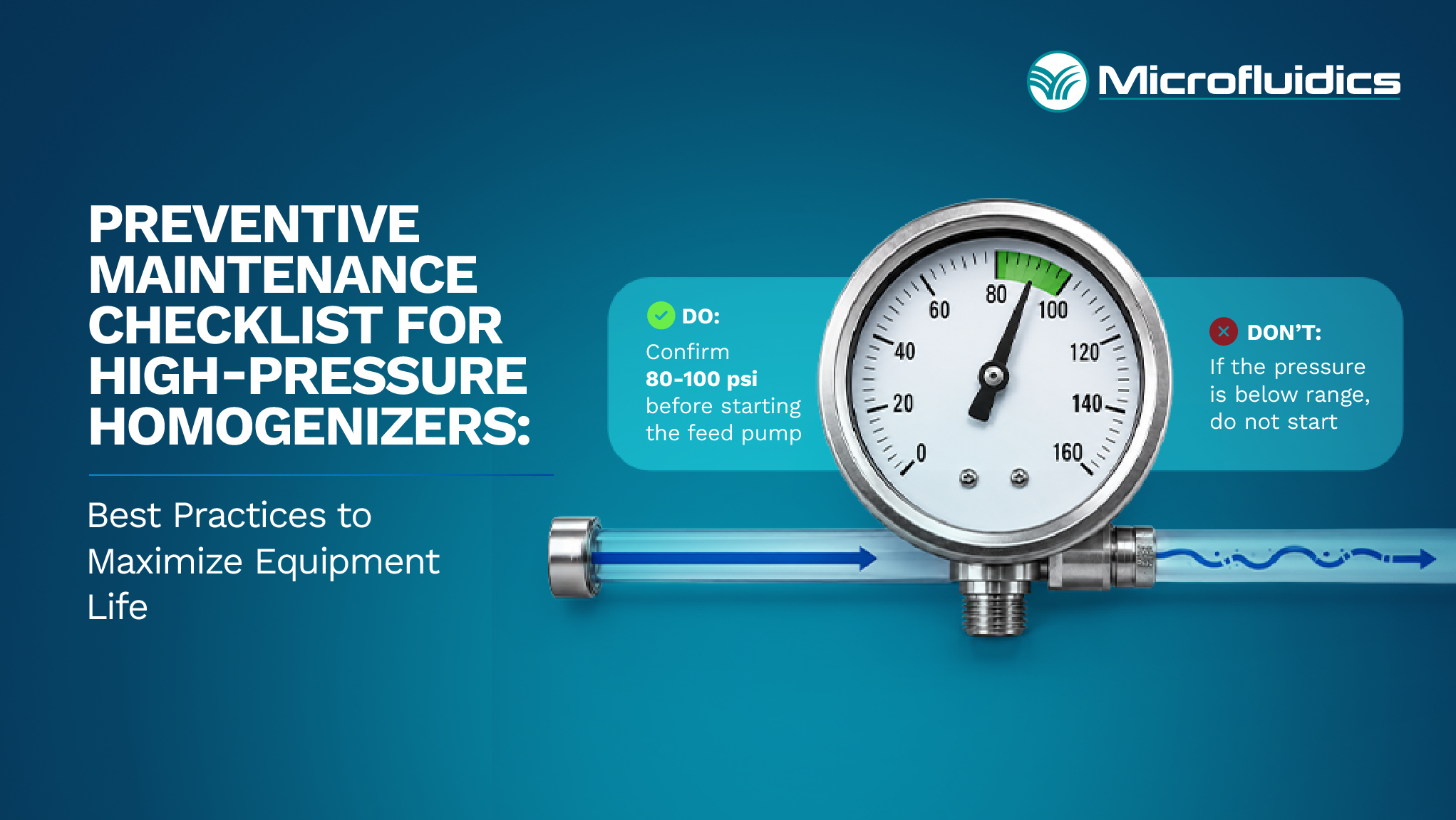
High-pressure homogenizers operate under severe mechanical stresses, frequently reaching operating high pressure to achieve uniform particle size reduction, nanoemulsification, and cell disruption. Implementing a structured homogenizer preventive maintenance routine directly prevents unexpected seal failures, pressure drops, channel erosion, and costly batch contamination. By systematically inspecting fluid ends, monitoring hydraulic system health, and replacing high-wear components according to operational hours, processing plants protect product stability while maximizing machinery service life.
What Is Homogenizer Preventive Maintenance and Why Does It Matter?
High-pressure homogenizers rely on tight mechanical tolerances and high shear forces to process emulsions, liposomes, and nanosuspensions. Continuous exposure to abrasive fluids, high fluid velocity, and cyclic pressure shocks creates severe wear on internal contact surfaces.
Homogenizer preventive maintenance is a scheduled system of routine inspections, fluid changes, and component replacements designed to catch mechanical degradation before it causes catastrophic equipment failure.
Proper maintenance delivers direct operational advantages across sanitary and industrial processing environments:
- Contamination Control and Hygiene: Prevents worn packing seals from harboring microbial growth or shedding particulates into sensitive pharmaceutical and food batches.
- Batch Consistency: Ensures stable pressure delivery, directly impacting target particle size distribution and emulsion stability according to validated production benchmarks.
- Process Efficiency: Reduces unscheduled downtime and keeps energy consumption predictable by maintaining pump volumetric efficiency.
- Safety and Compliance: Protects operators from high-pressure fluid leaks and maintains compliance with 3-A, FDA, and cGMP standards.
The Master Homogenizer Preventive Maintenance Checklist
To maintain peak operating performance, maintenance tasks should be scheduled at daily, weekly, monthly, and semiannual intervals.
| Frequency | Target Component | Maintenance Action | Primary Purpose |
|---|---|---|---|
| Daily | High-Pressure Seals | Inspect for pressure fluctuations and external fluid leaks | Prevent product loss and head seal failure |
| Daily | Hydraulic & Lubrication Unit | Check fluid levels, temperature gauge, and operating pressure | Protect drive components and maintain stroke stability |
| Weekly | Plungers & Packing | Inspect for scoring, wear marks, and verify flush line flow | Stop fluid bypass and extend plunger service life |
| Monthly | Interaction Chamber / Valves | Check wear surfaces, micro-channels, and seats for erosion | Maintain shear efficiency and target particle sizing |
| Semi-Annual | Hydraulic Oil & Filters | Sample hydraulic oil for particulate matter; replace filters | Ensure smooth power transfer and drive protection |
| Annual | Complete Fluid End | Overhaul seals, gasketing, O-rings, and spring assemblies | Restore fluid end to original factory specifications |
Key Focus Areas for High-Pressure Unit Maintenance
1. Plungers and High-Pressure Seals
The plunger assembly works continuously against high backpressure. Ceramic or coated plungers resist abrasion, but packing seals naturally degrade over time.
- Inspect plunger cooling and flushing lines daily to ensure continuous flow.
- Check seal cavities for signs of process fluid leakage.
- Replace worn seal packages immediately to prevent plunger scoring.
2. Micro-Channels and Shear Modules
In advanced high-pressure processors, micro-channels and reaction chambers experience intense cavitation, high shear, and impact.
- Examine internal geometry for pitting, erosion, or channel blockage.
- Monitor pressure differentials across processing modules to detect channel wear.
- Calibrate hydraulic actuators to ensure accurate pressure regulation.
3. Fluid End and Check Valves
Inlet and outlet check valves direct high-pressure flow through the processing zone. Worn components cause pressure pulsation and loss of throughput.
- Check valve seats, balls, and seals for uneven wear or thermal damage.
- Inspect solid stainless steel pump blocks for stress corrosion or micro-fracturing.
- Ensure all sanitary clamp connections and internal elastomeric seals meet processing specifications.
4. Drive System and Hydraulics
The power unit converts electrical energy into precise hydraulic force.
- Change hydraulic fluid according to manufacturer-recommended operating hours.
- Monitor main drive pumps for heat buildup or unusual vibration.
- Keep hydraulic cooling loops clean to prevent thermal oil degradation.
How Does Wear Impact Industrial Applications?
Preventive maintenance practices directly support the operational demands of cleanroom and heavy industrial environments:
- Pharmaceutical & Biotech Processing: In cell disruption and LNP formulations, even minor pressure fluctuations ruin batch uniformity. Timely seal replacement maintains the tight particle size distribution required for sterile injectables. When integrating bulk powder handling upstream, automated systems like Matcon Powder Handling Solutions ensure dust-free batch containment before fluid processing.
- Chemical & Material Processing: Handling abrasive dispersions, nano-pigments, or coatings quickly erodes standard metallurgy. Routine inspections ensure wear components are replaced before the main fluid block suffers permanent damage. For transferring viscous chemical feeds into the process stream, long-lasting positive displacement technologies like Viking Pump Solutions keep system feed rates consistent.
- Sanitary Liquid Transfer: Precision fluid metering requires smooth continuous flow upstream and downstream of high-pressure units. Relying on specialized sanitary metering systems such as Pulsafeeder Dosing Pumps protects equipment downstream from pressure surges.
Best Practices to Extend Equipment Operating Life
- Never Run Dry: Operating high-pressure plungers without seal flush water or process fluid rapidly destroys seal packing and thermal-shock ceramic components.
- Standardize Clean-in-Place (CIP) Routines: Ensure CIP flow rates and chemical concentrations follow validated parameters to prevent chemical attack on seal materials.
- Keep OEM Spare Kits On Hand: Maintain dedicated OEM spare kits (packing sets, check valve components, and O-rings) to eliminate lead-time delays during scheduled downtime.
- Log Operational Data: Track daily operating pressure, motor load amperage, and oil temperature. Shifts in these baseline metrics indicate early component wear before physical failure occurs.
Maximize Performance with IDEX India and Microfluidics
A thorough homogenizer preventive maintenance program is essential for protecting your capital investment, ensuring operator safety, and securing consistent product quality. By staying proactive with seal replacements, valve inspections, and hydraulic care, your facility eliminates unscheduled shutdowns and maintains precise process control.
When handling complex liquid processes, high-shear applications, and precise fluid transfers, technical expertise makes all the difference. IDEX India brings together world-class fluidics, powder processing, and high-pressure processing brands designed to meet strict industrial and hygienic standards. Through our specialized Microfluidics Solutions, including Microfluidizer high-pressure processors, IDEX India partners with pharmaceutical, biotech, and chemical manufacturers across India to deliver unmatched particle size reduction, continuous process reliability, and long-term operational success.