
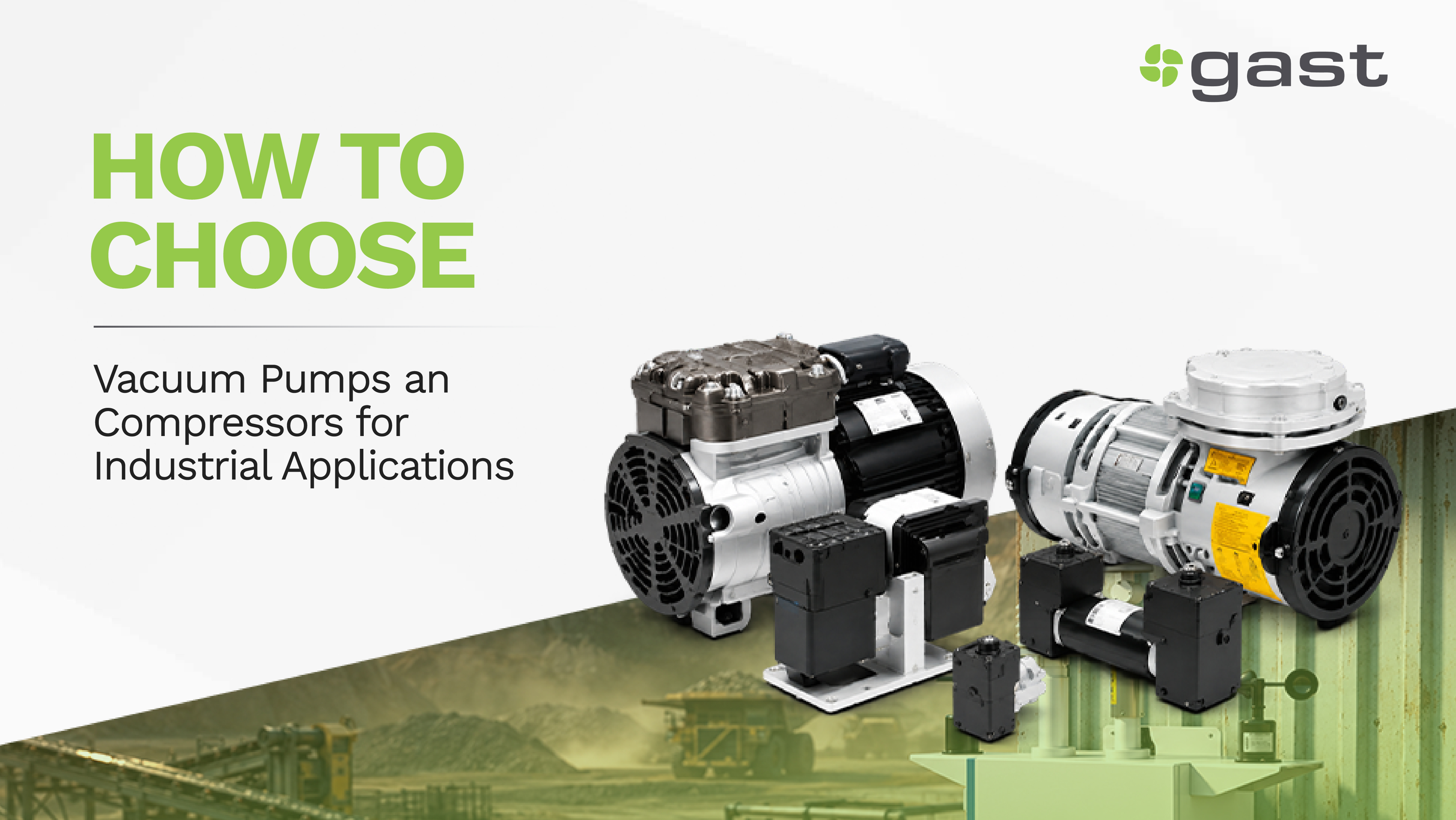
Choosing vacuum pumps and compressors comes down to one thing: match the machine to the process, not the other way around. The right industrial vacuum pumps or industrial compressors depend on your vacuum/pressure needs, the media you handle, duty cycle, cleanliness requirements, and lifecycle cost.
In manufacturing, the wrong choice can quickly become expensive. Compressed air systems alone can account for about 10% of industrial electricity consumption, and vacuum pumps are also a major energy user in industrial operations. That means an undersized, inefficient, or poorly matched system can drive higher power bills, contamination risk, poor transfer reliability, and avoidable downtime.
Why does this choice matter?
Industrial buyers often focus on horsepower or price first, but performance in real production conditions matters more. A well-chosen air compressor for industrial applications or a vacuum system improves throughput, protects product quality, and reduces maintenance interruptions.
IDEX India positions itself around engineered industrial solutions for pumps, compressors, flow meters, and related technologies, with dedicated focus areas in chemicals, water treatment, pharma, and other industrial markets.
What are vacuum pumps and compressors used for?
Vacuum pumps and compressors serve different roles, but both are essential in industrial operations. Vacuum pumps remove air or gas to create low pressure, while compressors deliver pressurized air or gas for tools, automation, transfer, and process support.
Typical industrial uses include:
- Powder transfer and material handling.
- Packaging and sealing.
- Pneumatic automation.
- Drying, filtration, and degassing.
- Chemical transfer and dosing.
- Pharma processes where contamination control and batch consistency matter.
How to choose vacuum pumps and compressors?
The process starts with application data. Define the required flow, vacuum level, or discharge pressure, operating temperature, run time, and the nature of the gas or material being moved. Ask these questions:
- What process problem must the system solve?
- Is the media clean, moist, dusty, corrosive, or sensitive?
- Do you need oil-less vacuum pumps and compressors for industrial use to avoid contamination?
- Will the system run continuously or only in short cycles?
- Is noise, heat, or footprint a concern in the plant?
Which type should you pick?
Different technologies suit different industrial needs. A vacuum pump selection guide for industrial applications should compare screw, rotary vane, diaphragm, liquid ring, and other technologies based on operating conditions, maintenance needs, and media compatibility.
For clean and sensitive processes
If product purity matters, oil-less vacuum pumps and compressors are often preferred. They help reduce contamination risk in pharma, food, packaging, and other sensitive applications where hygiene and batch consistency matter.
Chemical environments
Chemical plants often need corrosion-resistant materials, reliable transfer, and tolerance for aggressive media. In these settings, selecting the right materials and seals is as important as selecting the pump itself.
General manufacturing
For plant air, automation, and utility services, industrial compressors should prioritize efficiency, uptime, and serviceability. A durable system with easy access to spares usually delivers better long-term value than a lower-cost unit with high downtime risk.
What factors affect performance?
A good decision should weigh both process performance and operating cost. The most important factors are flow capacity, pressure range, efficiency at the actual operating point, and the ability to handle the process media safely. Also check:
- Duty cycle and thermal limits.
- Noise and vibration.
- Filtration and moisture management.
- Maintenance access and spare-part availability.
- Total cost of ownership, not just purchase price.
Where are they used in industry?
In pharma, vacuum systems support contamination control, powder flow, hygiene, batch consistency, safety, and process efficiency. These are not optional details; they directly affect product quality and regulatory confidence.
In chemicals, compressors, and vacuum systems must handle aggressive media with corrosion resistance and transfer reliability. In water treatment, they support process control and utility operations where uptime and energy efficiency matter.
How do buyers compare options?
Use a simple comparison matrix before shortlisting suppliers. This keeps the decision focused on process fit instead of brochure claims.
| Factor | What to evaluate | Why it matters |
|---|---|---|
| Vacuum/pressure requirement | Operating range and peak demand | Confirms the unit can do the job |
| Media compatibility | Dust, vapor, moisture, chemicals | Prevents failure and contamination |
| Oil-free need | Yes or no | Protects product quality |
| Duty cycle | Intermittent or continuous | Affects heat and durability |
| Maintenance | Service intervals and spare parts | Reduces downtime |
| Efficiency | Power use at actual load | Lowers operating cost |
Conclusion
The best vacuum pumps and compressors are the ones matched to your process, media, duty cycle, and contamination risk. For industrial buyers, that usually means comparing industrial vacuum pumps, industrial compressors, and air compressors for industrial applications by application fit, efficiency, serviceability, and long-term reliability.
At the end of the selection process, look for a supplier that understands industry-specific needs in pharma, chemicals, water treatment, and manufacturing. The kind of application-driven approach shown by IDEX India. We engineer industrial products across pumps, compressors, flow meters, and accessories, with an application focus in pharma, chemicals, and water treatment.